
About This Project
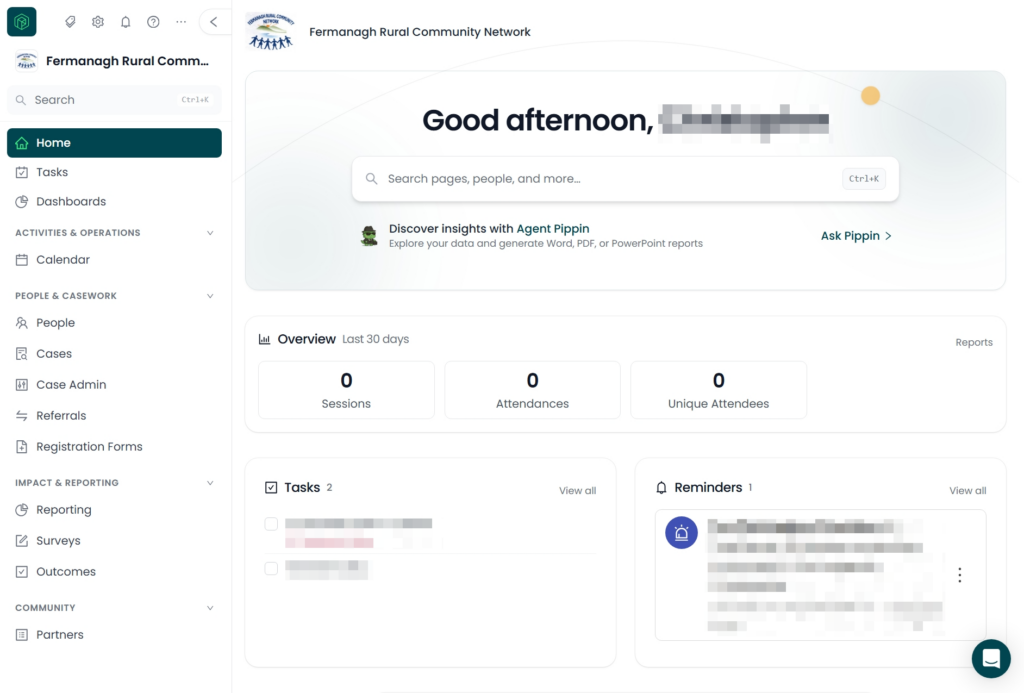
Fermanagh Rural Community Network (FRCN) leads the Western Response and Action on Poverty (WRAP) Programme across Fermanagh and Omagh. Household Enablers help households identify needs, access support and follow up referrals. The existing process uses questionnaires, spreadsheets, telephone calls, emails and referral forms, creating repeated recording and making it difficult to bring support activity and monitoring information together. Through STRIDE, the project developed a Plinth Community prototype to organise household support records and make reporting more traceable. Configuration and testing used fictional records. A complete fictional journey demonstrated how staff could record an accepted case, assessments, support actions, vouchers, follow-up tasks and closure, accompanied by a comprehensive guide document and screenshots for easier staff onboarding and training.
Design Thinking Workshops
A 1-day STRIDE Design Thinking Workshop was held at The Workhouse in Enniskillen, attended by 14 participants representing Fermanagh Rural Community Network, Lakeland Community Care, Omagh Forum for Rural Associations, ARC Healthy Living Centre, Oak Healthy Living Centre, The Courthouse Kesh, and a WRAP Programme Independent Evaluator. The workshop engaged participants in user journey mapping, challenge definition, ideation, prototype creation, and solution testing. This revealed the necessity of a centralized platform for handling entries digitally to act as one source of truth, since the challenge is not the absence of structure, but how information moves through it. Participants collectively agreed on the following challenge statement: “How might we reduce frustration, duplication, and time pressure for WRAP staff while preserving human-centred delivery and improving how referral information and support are captured, shared, and coordinated across partners?” Following the workshop, the project progressed into solution design, research, evaluation, and system configuration directly targeting the pain points identified by volunteers and facility users.
Deliverables
STRIDE deliverables included:
-
A modern digital platform for the case management that WRAP requires.
-
An appropriately costed, cloud-based solution (configured via Plinth Community).
-
A simple to navigate platform containing the client details, surveys, and records that are needed (including Member import, Household ID grouping, initial and final wellbeing assessments, support actions, vouchers, tasks, interaction outcomes, and case closure).
-
Support for multiple staff members to access and use the platform concurrently.
-
Data export compatibility allowing work with current digital files, where historical records can be added and new clients can be referred more easily.
-
Demonstration of controlled reporting and export checks, with modified Plinth surveys ensuring that exported spreadsheet answers copy and paste accurately into client master spreadsheets.
-
A task-based tutorial guide with screenshots detailing the fictional workflow, creating an editable source of truth document for ongoing staff onboarding and training.
Results & Impact
The prototype establishes strong technical functionality rather than serving as an immediate live operation. By running a complete fictional journey through the system, the project confirmed the capability to handle GDPR-aware data management of case data using a cloud-based setup. The intended community outcomes are a reduction in repeated recording, clearer follow-up of household support, and more consistent evidence for programme monitoring. While based on fictional data testing, the digital workflow visibly eased the workload based on client feedback, indicating that centralized records will improve continuity when staff share responsibilities.